Shockwave therapy for stubborn heel and elbow pain: what a session is like
Plantar fasciitis and tennis elbow have a way of hanging around. Here's what shockwave therapy is for, how it fits into a visit with us, and what to expect when you come in.

Some problems just don't want to leave. Heel pain that greets you on the first step out of bed. An elbow that flares every time you grip something. You've rested it, you've iced it, you've bought the brace, and it is still there months later.
Those are the cases where people usually ask us about shockwave therapy — and it's one of the five things we do here, so we get the question a lot.
What shockwave therapy is for
Shockwave therapy is a non-invasive treatment that speeds healing of stubborn tendon and soft-tissue problems — the kind that have gone chronic. Think plantar fasciitis, tennis elbow, and long-running tendinopathies that haven't responded to the usual approaches.
The key word is stubborn. This isn't the first thing we reach for on day one of a new ache. It's a tool for the problems that have dug in.
It's part of a visit, not the whole visit
One thing we want to be clear about, because it's different from how some places run it: at Moore Performance Health, shockwave isn't a walk-in, ten-minutes-and-out procedure done by a technician.
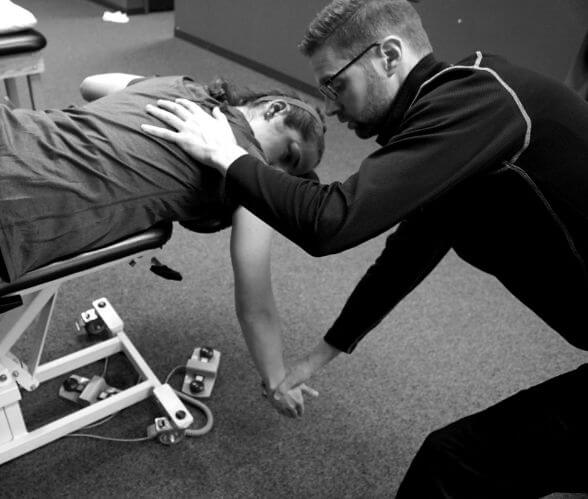
Every visit here is a full one-on-one session with your Doctor of Physical Therapy. If shockwave is part of your plan, it happens inside that hour, alongside the hands-on work and the evaluation of why the tissue got overloaded in the first place. Treating the tendon without addressing the cause is how people end up back where they started.
What to expect when you come in
Your first visit is an evaluation. We listen to the history — how long it's been going on, what makes it better or worse, what you've already tried. Then we look at how you move, not just the spot that hurts. Only after that do we talk about whether shockwave makes sense for you, and how it would fit with everything else.
We'll walk you through it before we start. You'll know exactly what we're doing and why, and you can ask anything along the way. Nothing here happens to you; it happens with you.
We keep the whole hour focused on you. No shared sessions, no handoffs. The person who evaluated you is the person treating you.
"How many sessions will I need?"
Honestly, it varies — and we'd rather say that than give you a number that turns out to be wrong. It depends on the tissue, how long it's been irritated, and what else is going on. What we can promise is that we measure our success by how quickly you get better, not by how many visits end up on the calendar. When you're done, you're done.
Who's doing the work
Greg is a Doctor of Physical Therapy with more than fifteen years in sports medicine, and he's treated everyone from first-time patients to professional athletes. Trevor Elliott, DPT, CSCS, and Greg Edward, MPT, PES, round out the team with the same doctorate-level, hands-on approach.
Not sure if it's for you?
That's a fair place to be — and it's exactly the kind of question we're happy to answer over a quick text. Tell us what's been going on and how long it's been going on, and we'll tell you honestly whether it's worth coming in. No referral is needed to start physical therapy in Michigan, and we take Blue Cross, Humana, most auto insurances and most workers' compensation plans; for anything else we'll verify your coverage, usually the same day.